
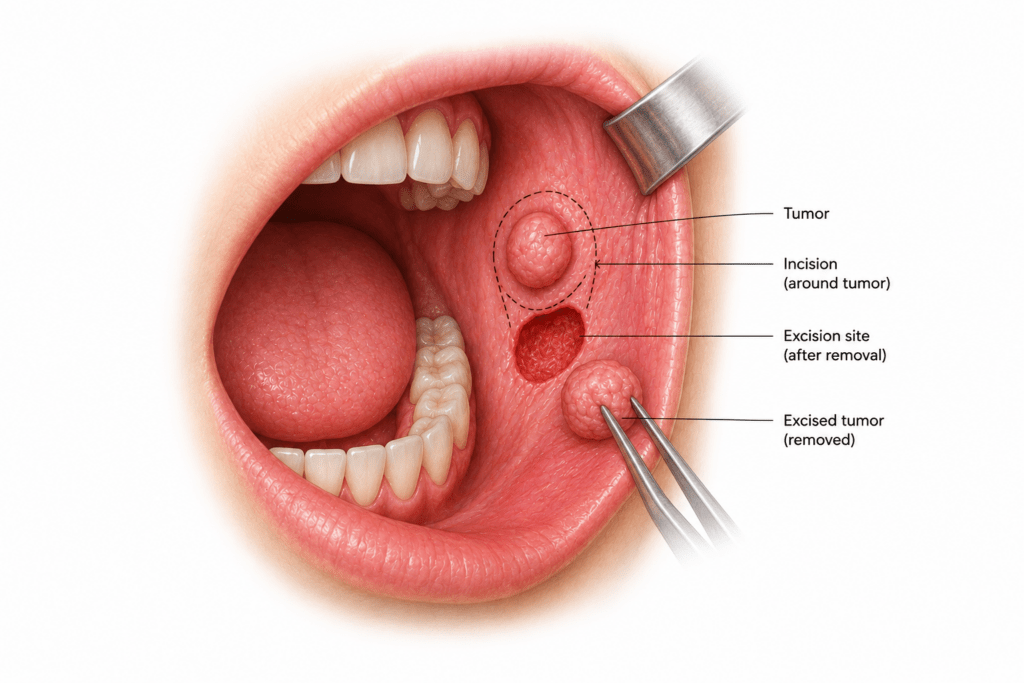
Oral tumor excision involves surgically removing abnormal growths from areas such as the tongue, gums, inner cheeks, lips, palate, or floor of the mouth. The procedure is planned to completely remove the tumor while preserving speech, swallowing, chewing, and oral function as much as possible.
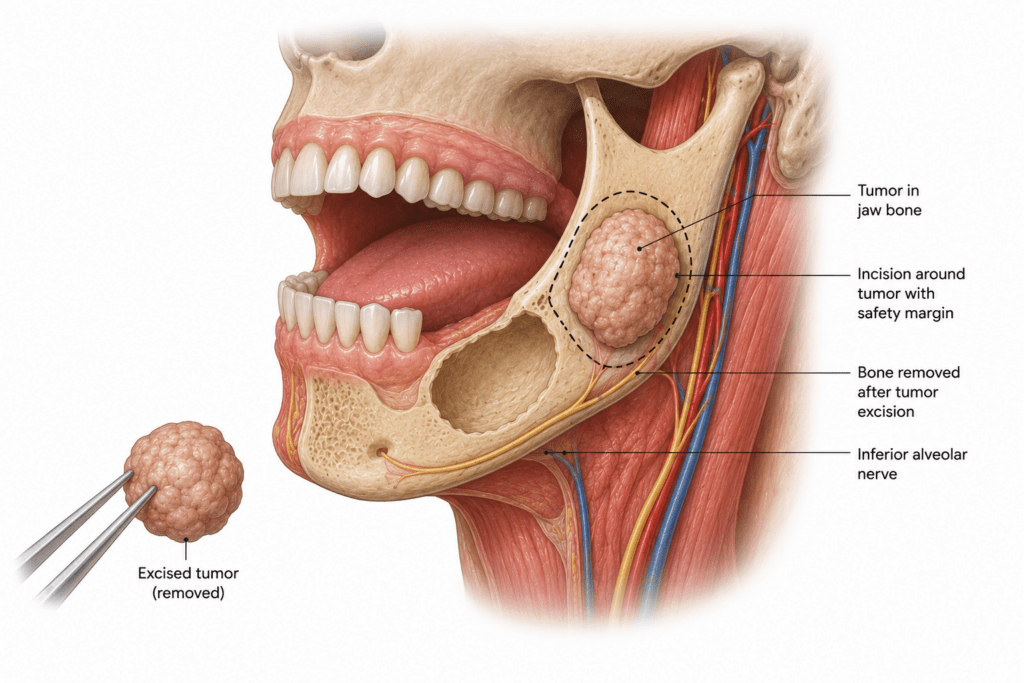
Jaw bone tumor surgery focuses on removing tumors affecting the upper or lower jaw while preserving as much healthy bone and oral function as possible. The extent of surgery depends on the tumor type, size, location, and involvement of surrounding structures.
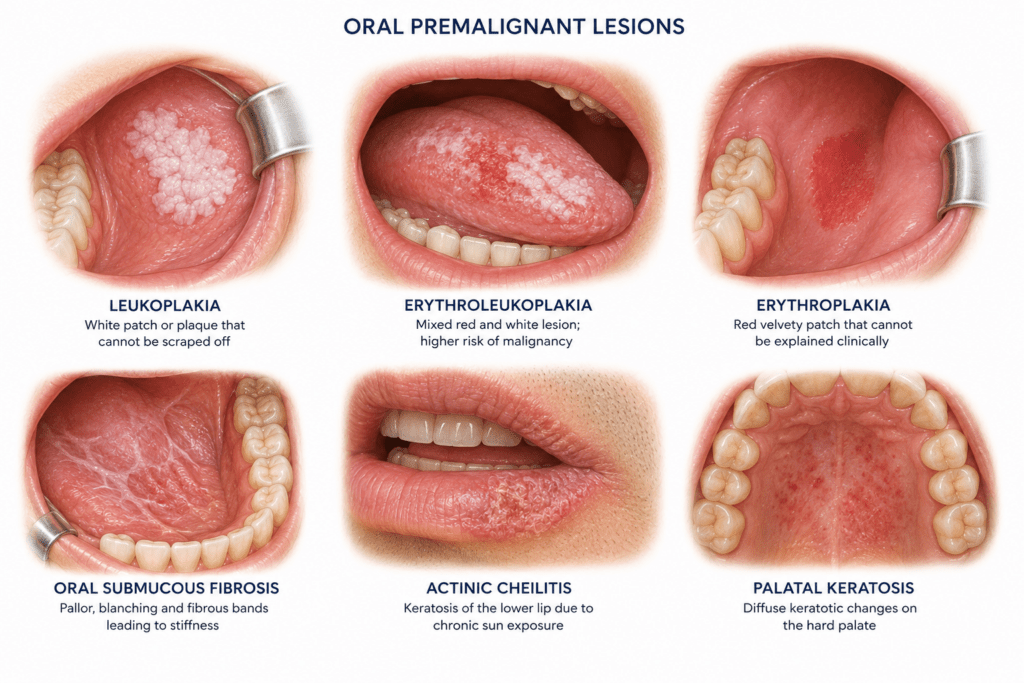
Oral premalignant lesion management focuses on identifying and treating abnormal changes in the lining of the mouth that may have a higher risk of developing into oral cancer. Evaluation may include clinical examination, biopsy, surveillance, or removal depending on the lesion and its risk factors.
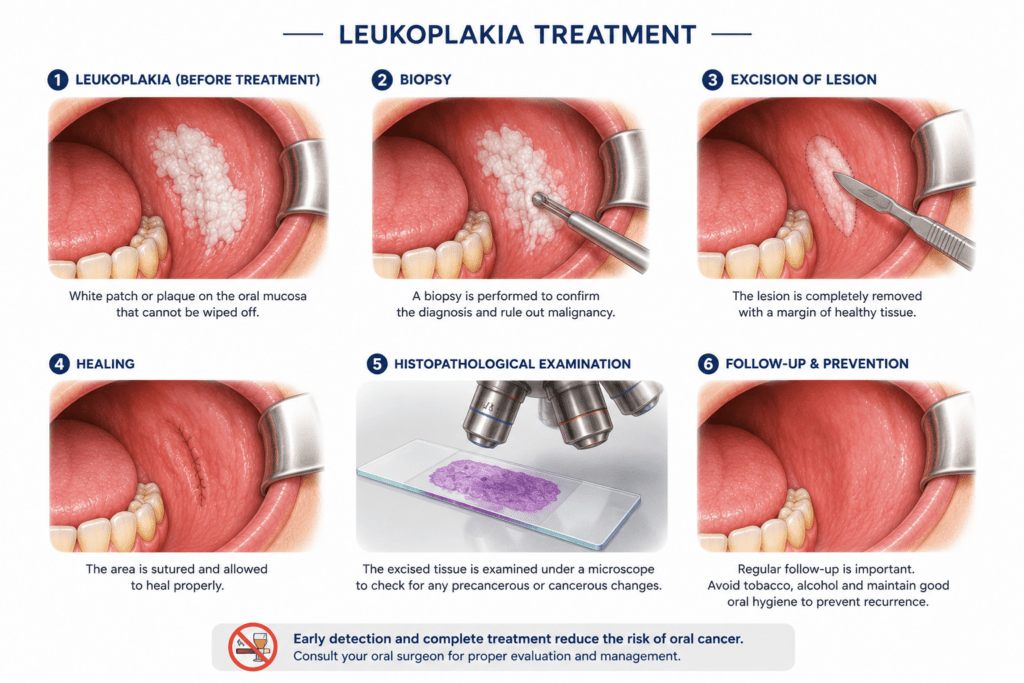
Leukoplakia treatment focuses on evaluating persistent white patches in the mouth and determining whether they require observation, biopsy, or surgical removal. Management is guided by the lesion’s appearance, location, underlying cause, and biopsy findings.
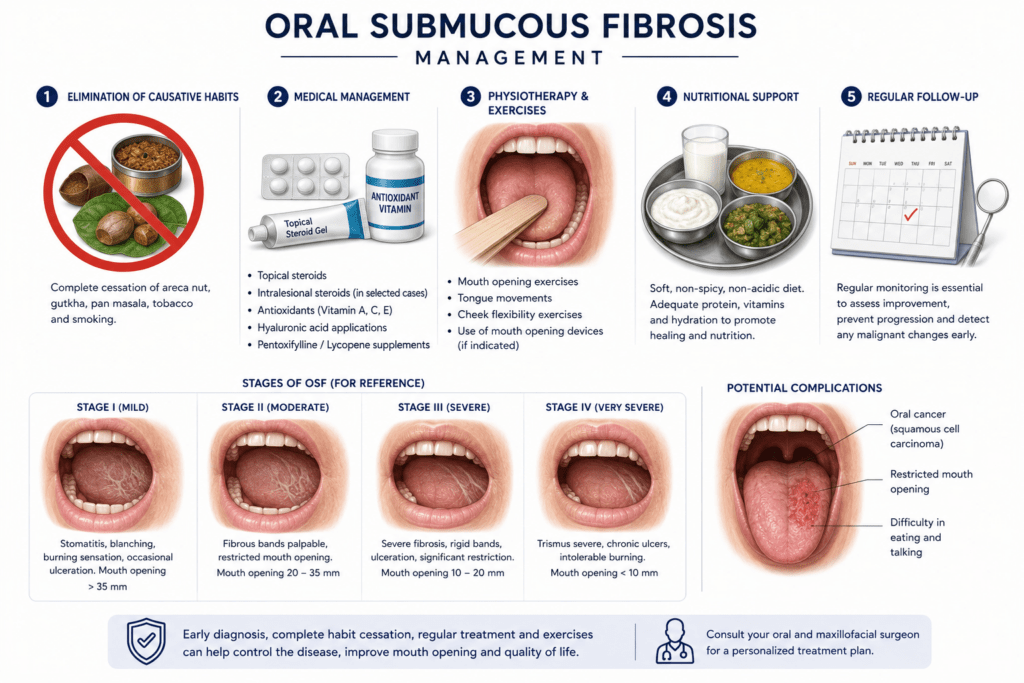
Oral submucous fibrosis management focuses on controlling the progression of this chronic condition and improving mouth opening and oral function. Treatment is tailored according to the severity of fibrosis and may include habit cessation, medical management, physiotherapy, or surgery in advanced cases.
“Behind every diagnosis is a person with hopes, fears, and loved ones. My goal is to guide each patient with expertise, empathy, and unwavering commitment.”
— Dr. Gurukeerthi B Kedilaya
2026 All Rights Reserved | Made with ❤️ By AstraVer Healthcare Marketing Agency